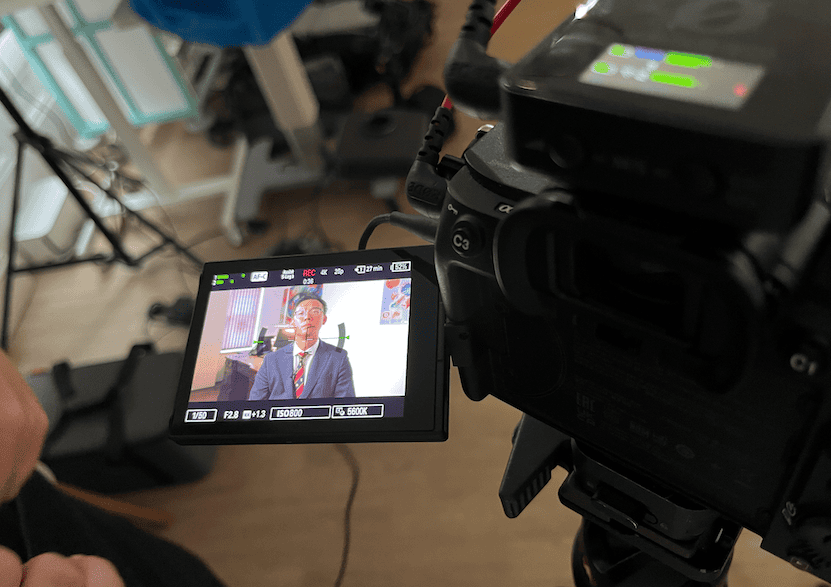
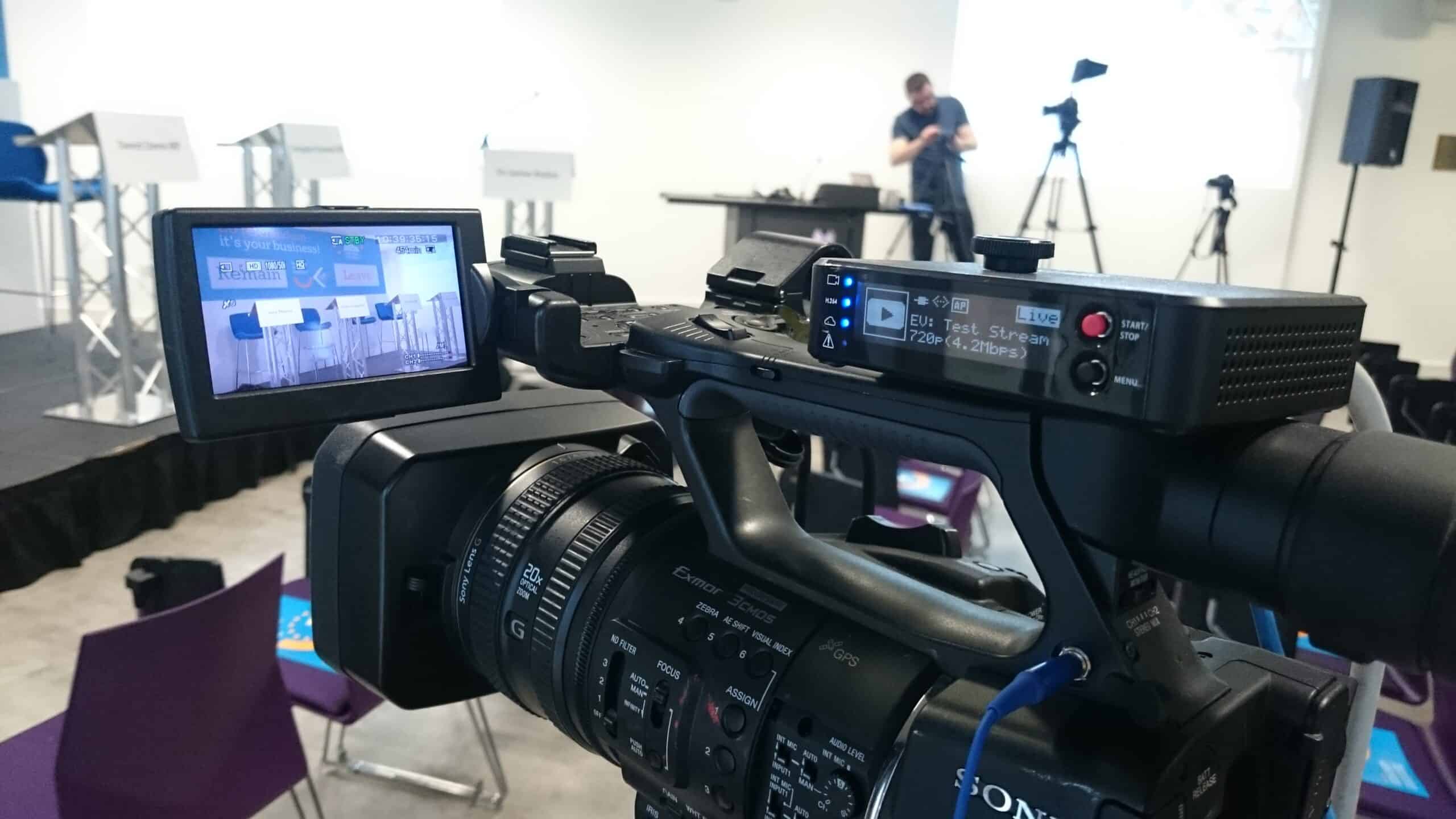
For years, businesses have treated video as something you commission when you have a specific need.
You’re launching a new product, refreshing your website or exhibiting at an event, so you book a filming day, produce a polished video and tick it off the list. Six months later, you’re back where you started, wondering what to post on LinkedIn or why your website isn’t generating enough enquiries.
It’s an approach that feels logical because it’s familiar, but it’s also one of the reasons so many organisations struggle to build momentum with their marketing. They’re thinking like advertisers, creating isolated campaigns around individual moments, when they would be better served by thinking like broadcasters.
Broadcasters don’t wake up each morning wondering what to air. They work to a schedule. They understand their audience, they know what those people expect and they create a consistent stream of content that keeps them coming back. Every programme has a purpose, every time slot has an audience, and every piece of content contributes to something larger than itself.
Businesses have far more in common with broadcasters than they often realise.
Your audience doesn’t arrive all at once
One of the biggest misconceptions in marketing is that people experience your business in a neat, predictable order. They don’t.
Some people discover you through Google because they’re actively looking for a solution. Others first see a LinkedIn post shared by someone in their network. Existing customers might receive your email newsletter, while a prospective client meets you for the first time at an exhibition or networking event.
Each of those people is arriving with a different level of understanding, a different problem and a different expectation of what they’ll find next.
That’s why a single hero video, however well produced, rarely delivers everything a business expects from it. It can’t answer every question, reassure every buyer or suit every platform because no single piece of content can serve every audience at every stage of their journey.
The mistake isn’t making a hero video. The mistake is expecting it to do the work of an entire content strategy.
Broadcasters build programmes, not one-off shows
Think about how a television channel works.
It doesn’t rely on one programme to satisfy every viewer. Instead, it commissions documentaries, news bulletins, entertainment, interviews and specialist programmes, all designed for different audiences and different moments.
Viewed individually, each programme has a specific purpose. Together, they create a complete schedule that keeps viewers engaged over time.
Businesses should approach content in much the same way.
Some videos exist to create awareness. Others explain a complex product or service. Customer stories provide reassurance when buyers are comparing suppliers, while onboarding content helps new clients get more value after they’ve signed the contract.
Each piece performs a different job, but together they form a system rather than a collection of disconnected assets.
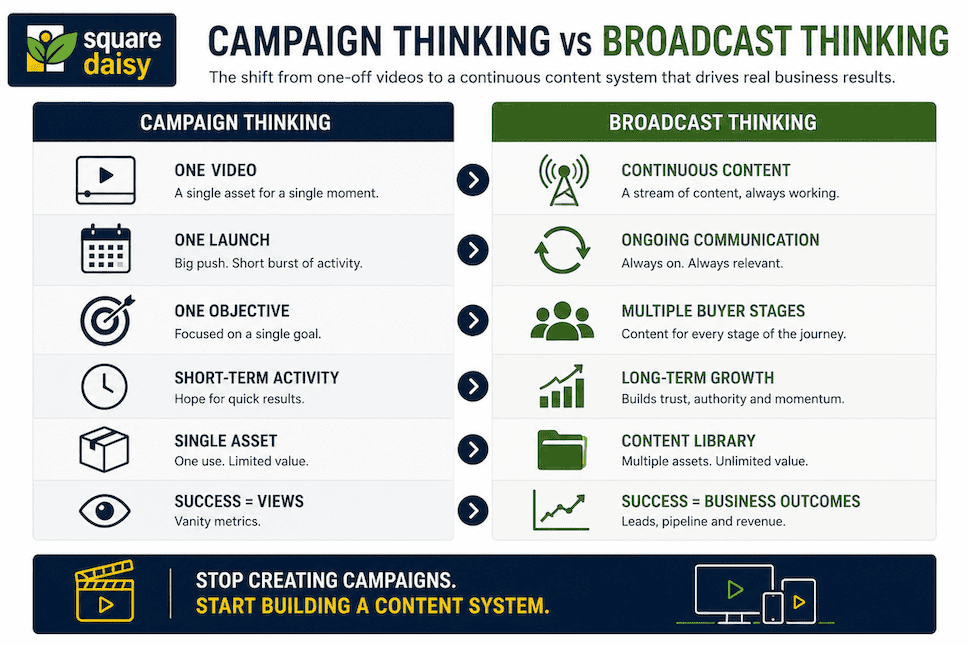
Stop asking, “What video do we need?”
A more useful question is, “What does our audience need to understand next?”. That small shift changes everything.
Instead of beginning with formats, you begin with people. What questions are they asking? What concerns do they have? What’s preventing them from moving forward? What would help them make a confident decision?
Once those questions are clear, deciding what content to create becomes much easier because every piece has a defined purpose. This is one of the reasons so much business content feels repetitive. Companies keep talking about themselves because they start with their own messages instead of their audience’s needs.
Broadcasters don’t think that way, they think about viewers first. Businesses should do the same.
Consistency builds familiarity
One of the advantages broadcasters have is consistency. The news appears at the same time every day. Weekly programmes become part of people’s routines. Audiences know what to expect, and that familiarity builds trust over time.
Marketing works in much the same way.
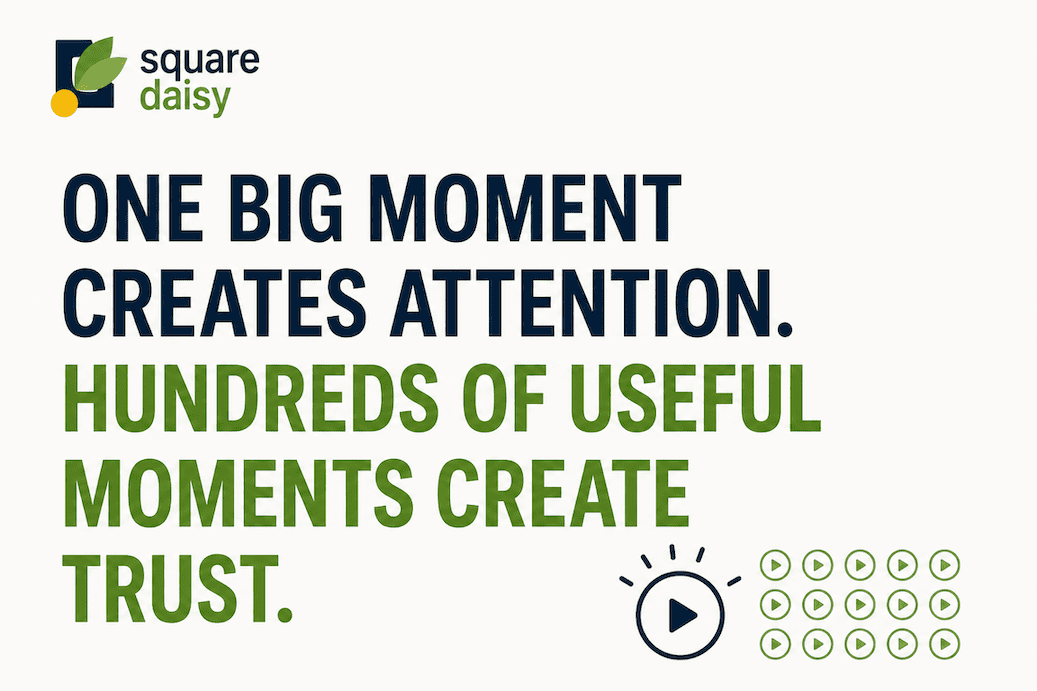
Most buying decisions don’t happen because someone saw one exceptional piece of content. They happen after repeated exposure. A prospect reads an article, sees a LinkedIn post a week later, watches a customer testimonial, visits your website and eventually books a conversation.
No single interaction closes the deal, but each one contributes to the next. When businesses only create content sporadically, they interrupt that process. They appear active for a few weeks before disappearing again, leaving long gaps where potential customers simply forget they exist.
Thinking like a broadcaster means recognising that consistency is often more valuable than occasional bursts of activity.
One filming day should create a season, not an episode
Broadcasters are efficient because they plan ahead. They don’t assemble an entire production team to record one five-minute programme before packing everything away again. They capture multiple episodes, interviews and promotional material while everyone is already there.
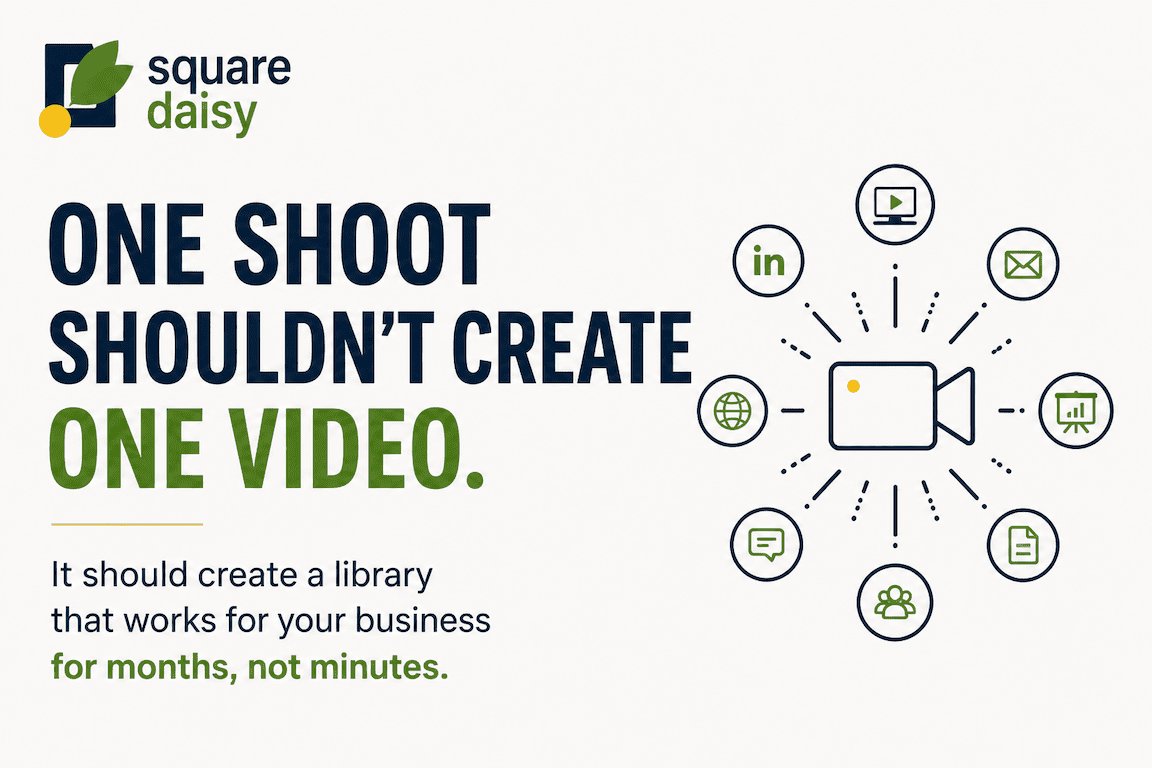
The same thinking applies to commercial video. A filming day shouldn’t produce one finished video. It should produce a library of content that supports your website, LinkedIn, presentations, sales process and future campaigns.
A customer interview might become a testimonial, several short social clips, a case study, website content and supporting material for proposals. The footage hasn’t changed, but the way it’s used has.
That’s where the return on investment comes from. Not because the video looks impressive, but because it continues delivering value long after filming has finished.
Build a content ecosystem, not a content calendar
Content calendars are useful, but they often focus on when something will be published rather than why it exists. Broadcasters think differently. Every programme has a role within a wider schedule. Businesses should aim for the same clarity.
Instead of asking whether you need another LinkedIn post, ask whether you have content for every stage of your buyer’s journey. Can someone who has never heard of your business quickly understand the problem you solve? Is there enough information available for someone comparing suppliers? Do existing customers continue hearing from you after they’ve signed the contract?
If the answer to any of those questions is no, you’ve identified a gap in your content ecosystem and that gap matters far more than whether you’ve posted three times this week.
The businesses that stay visible are rarely the loudest
It’s tempting to think visibility comes from producing more content than everyone else, but that’s rarely the case. The businesses that consistently attract attention are usually those with a structured approach. They understand who they’re speaking to, what those people need at different stages and how each piece of content supports the next conversation.
That’s exactly how broadcasters think. Every programme has an audience. Every audience has different expectations. Success doesn’t come from trying to make one programme appeal to everyone. It comes from building a schedule that serves different needs over time.
Marketing isn’t really that different. The businesses that will continue to grow aren’t those creating the most videos. They’ll be the ones building systems that communicate consistently, answer the right questions and remain useful long after the cameras have been packed away.