When businesses talk about the return on investment of video, the conversation usually starts in the wrong place.
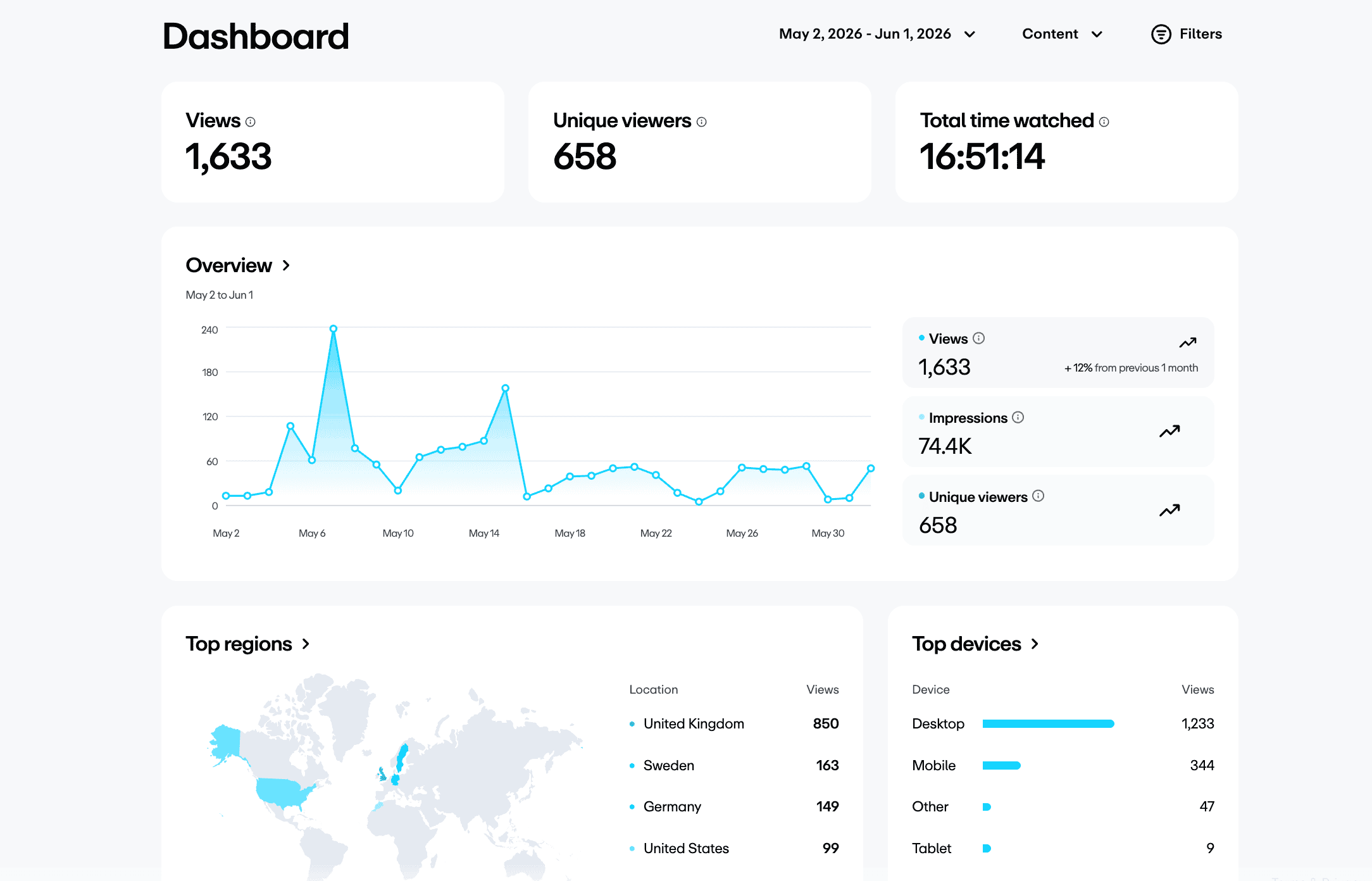
Views, clicks, impressions and engagement rates dominate most reporting discussions. Those metrics are useful, particularly when evaluating paid campaigns, but they rarely tell the full story. In many cases, the most valuable outcomes generated by video never appear in a dashboard at all.
That’s because video is often measured as though it’s a campaign when it should be viewed as an asset.
A campaign has a start date, an end date and a specific objective. A well-planned video, however, can influence prospects, employees, investors and stakeholders for years. Its impact is often cumulative rather than immediate, and indirect rather than linear.
For finance-aware marketers and business owners, this distinction matters. If you’re evaluating video solely on short-term performance metrics, there’s a good chance you’re underestimating its contribution to the business.
The Problem With Measuring Video Like Advertising
One of the most common questions businesses ask after investing in video is, “What ROI did we get?”
It’s a reasonable question, but it’s often difficult to answer in a straightforward way because video rarely follows a direct path from investment to revenue.
Imagine a prospect discovers your business through LinkedIn, visits your website, watches your brand film, reads a case study, receives a recommendation from a colleague and then books a meeting three months later. Which of those touchpoints generated the sale?
The answer is usually all of them.
Video often plays a supporting role within a much larger decision-making process. It builds confidence, answers questions, reduces uncertainty and reinforces trust. Those contributions are commercially valuable, but they’re not always easy to attribute to a single metric.
This is particularly true in B2B environments where buying decisions involve multiple stakeholders, longer sales cycles and higher levels of perceived risk. In those situations, video isn’t simply generating demand. It’s helping prospects feel comfortable enough to move forward.
Brand Perception Has Commercial Value
Before someone becomes a customer, they form an opinion.
Whether they’re consciously aware of it or not, potential buyers are assessing your credibility, professionalism and capability long before they speak to your sales team. They’re asking themselves whether you appear established, trustworthy and competent enough to justify further investigation.
Video can have a significant influence on those perceptions.
A well-produced corporate film, customer testimonial or explainer video allows people to see your business in action. It helps them understand who you are, how you operate and what it’s like to work with you. In sectors where trust matters, that reassurance can be incredibly valuable.
The challenge is that confidence doesn’t appear on a spreadsheet.
You won’t find a column labelled “prospect trust generated” in your monthly marketing report. Yet trust remains one of the most important factors influencing buying decisions. When video helps establish that trust earlier in the buyer journey, it often makes every subsequent sales and marketing activity more effective.
The Hidden ROI of Sales Enablement
One area where businesses frequently underestimate the value of video is sales support.
Most organisations spend significant resources generating leads, but comparatively little attention is given to helping prospects progress through the buying process. This is where strategically planned video can deliver substantial commercial value.
A well-structured video can answer frequently asked questions, explain complex services, demonstrate expertise and address common concerns before they become objections. Instead of sales teams repeatedly covering the same ground in every conversation, prospects arrive better informed and with a clearer understanding of the proposition.
The result is often a more efficient sales process.
Meetings become more productive because less time is spent explaining fundamentals. Prospects can self-educate before engaging with your team. Decision-makers who weren’t present during an initial conversation can review the content independently.
In this context, the ROI of video isn’t simply measured in lead generation. It’s measured in improved conversion rates, shorter sales cycles and better use of internal resources.
Recruitment and Internal Communication Often Deliver the Clearest Returns
Marketing tends to dominate discussions about video, but some of the most measurable returns can come from elsewhere in the business.
Take recruitment as an example. Hiring is expensive, particularly when organisations struggle to attract suitable candidates. Recruitment videos help potential applicants understand the culture, people and expectations associated with a role before they apply. This often improves candidate quality while reducing applications from individuals who are unlikely to be a good fit.
The result is a more efficient recruitment process and less time spent reviewing unsuitable applications.
Similarly, internal communication can generate meaningful returns that rarely appear in marketing reports. Businesses spend thousands of hours onboarding employees, explaining processes and sharing important information. When that communication is inconsistent, mistakes occur, training becomes repetitive and valuable knowledge remains trapped within individuals rather than systems.
Video helps standardise communication. It allows businesses to deliver clear, repeatable information that employees can access whenever they need it. Over time, that can reduce training costs, improve consistency and free up internal resources for more valuable work.
None of these outcomes are particularly glamorous. All of them have commercial value.
Measuring Video More Effectively
This doesn’t mean businesses should stop tracking views, engagement or website traffic. It simply means those metrics should be viewed as part of a broader picture rather than the whole story.
A more useful approach is to consider how video supports wider business objectives. Has it improved the quality of enquiries? Has it shortened the sales cycle? Has recruitment become easier? Are fewer prospects asking basic questions? Has onboarding become more efficient?
These are often stronger indicators of commercial impact than raw viewing figures.
The reality is that businesses don’t invest in video because they want views. They invest in video because they want outcomes. The measurement framework should reflect that reality.
Video Is an Asset, Not a Campaign
The businesses achieving the strongest returns from video tend to approach it differently.
Rather than commissioning a single video and hoping for results, they build assets that can support multiple areas of the business. A single filming day might generate content for a website, sales presentations, recruitment campaigns, LinkedIn activity, email marketing and internal communications.
This approach changes the economics completely.
Instead of asking, “How much did this video cost?” the more useful question becomes, “How many business functions can this asset support?”
When planned properly, video continues creating value long after production is complete. It supports trust-building, improves communication, strengthens sales activity and helps organisations present themselves more effectively to the people who matter.
That’s why the ROI of video is rarely immediate and rarely linear.
It’s also why the organisations that generate the greatest return don’t view video as a marketing expense.
They view it as commercial infrastructure.