Manufacturing businesses often have far more to show than a product image, specification sheet or short website description can communicate.
Precision processes, specialist equipment, experienced teams and quality control systems may all influence a purchasing decision. Yet the buyer researching a supplier online may only see the finished component or system, with little understanding of the operational capability behind it.
Manufacturing video production helps close that gap. It gives prospective customers a clearer view of the people, process and environment behind the product, while helping sales and marketing teams communicate technical strengths in a form that is easier to assess.
That doesn’t mean filming machinery for the sake of it. The commercial value comes from showing the right evidence to the right audience. A procurement lead may need confidence in a manufacturer’s operational capability. A technical buyer may need a clearer view of an application. An internal audience may need a more consistent explanation of a process.
Without that purpose, factory footage can look polished but add little to the wider sales, recruitment or communications effort. The strongest videos give the audience a clearer understanding of what the business can offer and why that matters to their next decision.
What should a technical manufacturer look for in a video production partner?
For a technical manufacturer, the choice of production partner affects more than how the finished video looks. An experienced industrial video production company should understand the operational context, protect the accuracy of the message and shape the content around a clear business purpose.
The right partner will recognise that a factory is a live operational environment, with production schedules, restricted areas and site procedures that need to inform the filming plan. A manufacturing video production company in the UK should also work with the people who understand the process best, building technical review into the script and edit so the final video remains accurate.
Procurement teams, engineers, sales teams and potential recruits will each look for different information. If an important part of the process cannot be shown clearly on camera, animation may be the better route. Every decision should still come back to what the video needs to achieve, whether that is supporting a tender, helping a buyer assess a product or giving candidates a clearer view of the role.
What makes manufacturing environments different to film in?
Manufacturing sites are active workplaces. Production schedules, safety requirements and operational priorities must come before filming. This is where factory video production becomes more involved than filming a conventional business setting. The site, the process and the working day all influence what can be filmed and how the message is communicated.
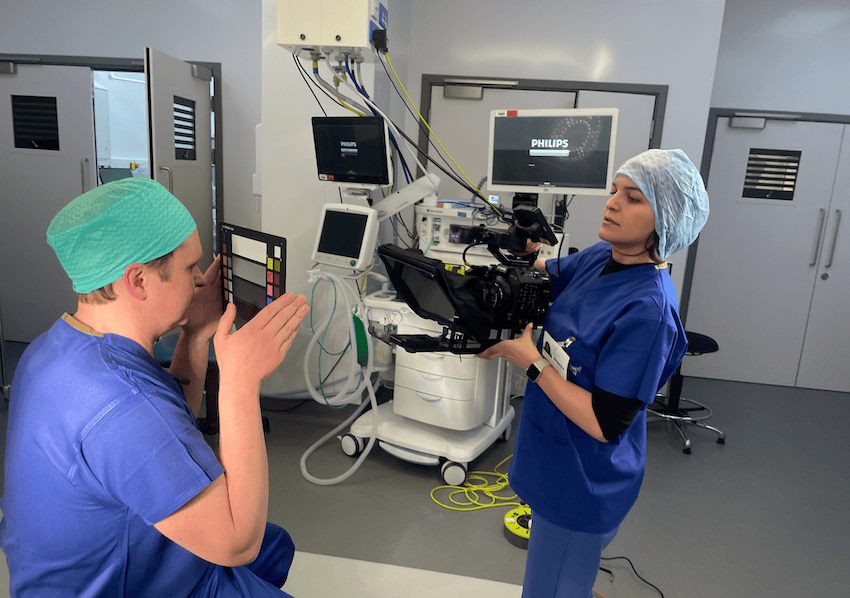
Manufacturing video production requires a crew that understands how to work safely in an industrial environment. PPE requirements, site inductions and operational hazards all need to be considered when planning the shoot, alongside access restrictions and machinery activity.
There are practical challenges beyond safety. Large industrial spaces may have mixed lighting, while machinery and production activity can make audio capture more difficult. Some processes cannot be paused for a camera crew, repeated on demand or filmed from every angle.
The production also needs to account for the communication gap between those inside the business and the people looking in. Employees may understand every technical stage instinctively. A prospective customer may need a simpler, more structured explanation before they can see why the process matters.
Video roles across a manufacturing business
A manufacturer may need video to support several areas of the business, although each piece of content should have a defined job.
A capability-led film can give a prospective customer a more useful introduction to a facility before a meeting, tender discussion or site visit. Product-focused content can help commercial teams explain equipment or components with greater consistency. Recruitment material can provide candidates with a more realistic view of the working environment and the roles available.
Technical knowledge also has value inside the organisation. When information needs to be repeated across onboarding, process awareness or workforce development, training videos can help make the message clearer and more accessible.
The same principle applies whether content appears on a website, in a sales presentation, at an event or within tender materials. Video should help the audience move towards a more informed decision.
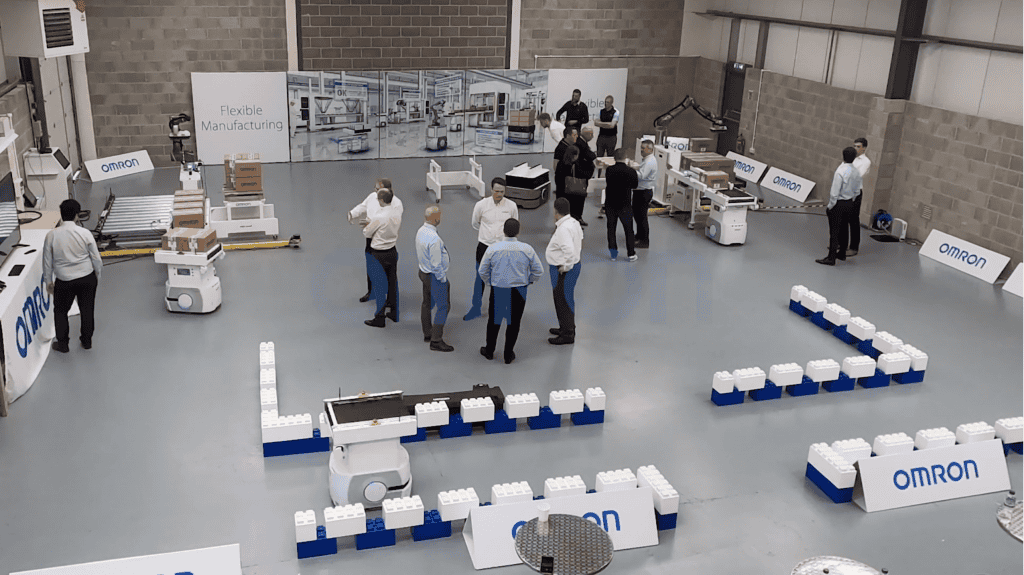
For Omron’s flexible manufacturing roadshow, the brief involved a manufacturing roadshow, robotics lab and innovation network. This made practical application central to the content. Rather than presenting technology in isolation, the video needed to help visitors understand how flexible manufacturing and robotics could relate to operational challenges within their own environment.
The technical accuracy requirement
Technical accuracy carries particular weight in manufacturing video. In technical video production, a product demo or capability film that misrepresents a process, specification or application can create doubt among the technical buyers it is intended to reassure.
Engineers, operations directors and procurement teams will approach the content from different perspectives, but each may be looking for evidence that the manufacturer understands its own operation and can communicate it clearly. Vague terminology, oversimplified sequences or equipment shown in a way that does not reflect real-world use can weaken that confidence.
Technical stakeholders should therefore be involved throughout the project. Marketing teams may define the audience, message and commercial objective, while the people responsible for the product, process or facility should help shape the brief and review the script, on-screen wording and final edit. This allows the video to remain accessible to non-technical viewers without losing the detail that gives it credibility.
Accuracy also affects what is chosen for the screen. A film does not need to show every stage of a process, but the stages it does show should be relevant and correctly represented. If a particular machine, inspection point or production method is included because it demonstrates a strength, the viewer should understand why it matters rather than seeing it as generic factory footage.
The Springtech manufacturing promotional video provides a relevant example. Springtech operates in precision spring technology, so the production needed to give specialist manufacturing work sufficient operational context. That helps the audience see beyond the finished item and understand that precision, process and technical knowledge sit behind the product.
The objective is not to turn a video into a technical manual. An engineering video production company should make technical capability easier to assess, without losing the operational detail that gives the message credibility.
Animation for manufacturing
Some manufacturing processes are difficult to explain through live filming alone. The detail may happen inside a machine, at a microscopic scale or at a speed that is impossible to follow on camera.
In those situations, animation gives the production greater control over what the viewer sees and when. It can isolate a component, slow down an assembly sequence or make an otherwise hidden process visible, helping technical information land without relying on an extended verbal explanation.
This can be particularly useful when a product, process or system needs to be understood by people with different levels of technical knowledge. A buyer may only need to see how the main elements work together, while internal teams may require more detailed process visualisation. The style and level of detail should reflect that difference.
Live action and animation can work well together. Factory footage establishes the real people, site and equipment involved, while animated video production can show the mechanism, sequence or quality-control activity that cannot be captured clearly in the working environment.
The IPEC partial discharge animated training series was developed as a series of animated training content focused on partial discharge. A series format can be particularly useful for technical learning because it allows complex subject matter to be separated into clearer stages, rather than placing every explanation into one longer film. For manufacturing businesses, the same approach can support product education, assembly guidance or repeatable internal training where accuracy and clarity both matter.
The trust-building function of manufacturing video
B2B manufacturing decisions can involve significant technical, commercial and operational considerations. Buyers may be comparing several suppliers before deciding who is worth speaking to, particularly where the work is specialist or the investment is substantial.
Capability videos serve a specific commercial function for manufacturers. They allow a buyer who cannot visit in person to assess operational credibility before committing to a procurement conversation. The content should anticipate the questions that would normally arise during a site visit, including the nature of the facility, the people involved and the level of care visible within the process.
Our Whiteline Manufacturing project was capability-focused, which gave the video a clear trust-building role. By showing the manufacturing environment and operational context, the content was designed to give prospective customers a more tangible sense of the business behind the initial claim. For a buyer who has not yet met the team or visited the site, that visibility can make the supplier feel easier to assess.
Product video can support trust from a different angle. With the Reeco robot palletiser promotional video, our focus was on the robot palletiser rather than a broader facility overview. Showing industrial equipment in a working context helps a prospective customer understand its purpose and application, rather than leaving them to interpret features from product information alone.
A stronger return on video investment comes from planning where the content will sit within wider sales, marketing, recruitment or internal communications activity. Used within a website journey, tender presentation or sales discussion, a capability or product video can give the audience useful evidence before the next conversation. Content created without an identified audience or use case is less likely to make a meaningful contribution.
Plan manufacturing video around the decision it needs to support
The strongest manufacturing content is not built around a broad instruction to show the factory. It starts with the decision the audience needs to make.
A procurement team may need greater confidence in capability. A technical buyer may need to understand a process or application. An employee may need clearer information they can apply in their work. A potential recruit may need a more realistic picture of the environment and role.
Square Daisy has produced manufacturing and industrial video for robotics manufacturers, precision spring technologists and large-scale facility operators. The work reflects the practical requirements of technical environments, where safety, accuracy and commercial relevance need to work together.
If you are weighing up a capability film, technical product video, process animation or training project, get in touch with Square Daisy to discuss your audience, communication need and wider business objective.