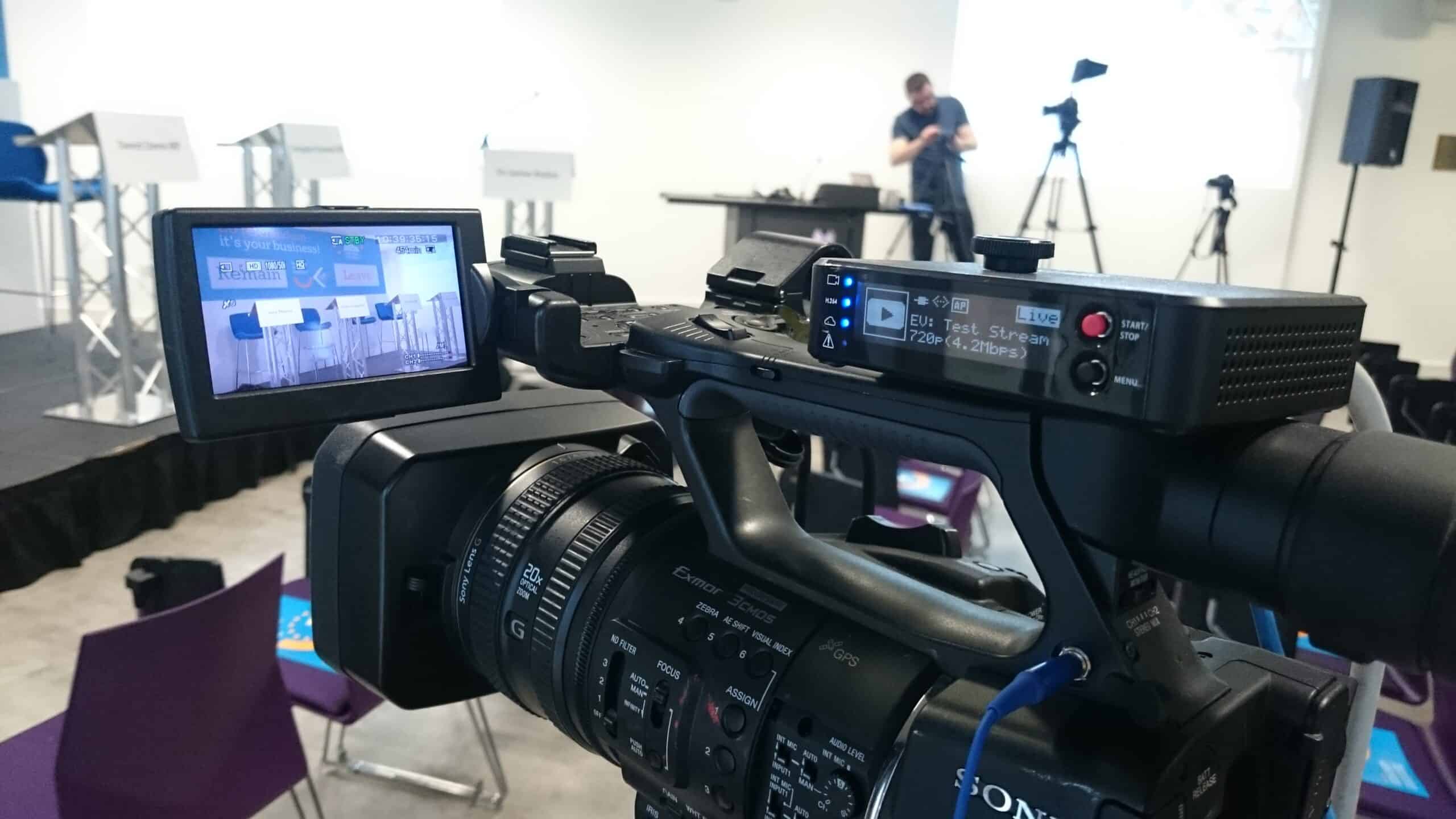
There has never been a better time to create content.
A decent smartphone can shoot in 4K. Editing software that once cost thousands is now available for a monthly subscription. AI can write scripts, generate ideas and produce social posts in seconds. If the barrier to entry was once technical, it has almost disappeared.
The result is that businesses are producing more content than at any other point in history.
They’re publishing videos every week. They’re feeding LinkedIn, Instagram and YouTube. They’re investing in podcasts, webinars, behind-the-scenes clips and thought leadership. Marketing teams have become content factories, measuring success by output as much as outcomes.
Yet for all this activity, many organisations remain surprisingly difficult to understand.
Ask a prospective customer what makes one business different from another, and the answer is often vague. The company has been highly visible, but visibility alone hasn’t created a clear impression. Somewhere between the content calendar and the publishing schedule, the message has become diluted.
The problem isn’t that businesses need more content.
The problem is that they need something meaningful to say.
The cult of “always on”
For the last decade, marketers have been encouraged to think like publishers. Stay visible. Post consistently. Never let your channels go quiet. The logic is understandable. Brands that disappear from view are rarely remembered, and regular communication helps build familiarity over time.
But somewhere along the way, consistency became confused with constant production.
Instead of asking whether a piece of content moves the audience closer to a decision, many organisations simply ask whether there’s something scheduled for Tuesday morning. Marketing becomes an exercise in filling gaps rather than creating momentum.
None of this is helped by the way success is often measured. A content calendar full of activity feels productive. Dashboards are populated with impressions, likes and engagement rates. Internally, everyone can see that marketing is busy.
Busy, however, isn’t the same as effective.
Publishing more frequently doesn’t automatically strengthen a brand. In many cases, it does the opposite. Every disconnected message, trend-led post or reactive video pulls attention in a slightly different direction until the organisation no longer has a clear centre of gravity.
Visibility is not the same as impact
One of the biggest misconceptions in modern marketing is the assumption that if enough people see your content, your brand will naturally become stronger.
It rarely works like that.
People don’t remember businesses simply because they’ve appeared in their feed several times this month. They remember businesses that consistently stand for something. They remember organisations that explain problems differently, challenge assumptions or communicate with unusual clarity.
The difference matters because visibility is temporary. Impact lasts.
Think about the brands you genuinely admire. Chances are you don’t remember dozens of individual posts they’ve published over the past year. What you remember is how they made you think about a particular problem. You remember their point of view.
That isn’t an accident. It’s the result of strategy, not frequency.
Production has become the easy part
The video industry has changed dramatically over the last few years.
High production values were once a genuine differentiator. Owning the right equipment, understanding complex editing workflows and producing broadcast-quality footage required specialist knowledge that relatively few people possessed.
Today, those capabilities are widely available.
Most agencies can produce attractive video. Many in-house teams can too. Cameras are better, software is faster and AI is reducing the time it takes to complete work that previously required days of manual effort.
This is good news for businesses, but it also changes where the real value lies.
If almost everyone can produce technically competent content, production quality stops being the thing that sets you apart. The competitive advantage shifts upstream, towards strategy, messaging and the thinking that happens long before anyone presses record.
The difficult question is no longer, “Can we make a video?”
It’s, “What change in perception do we want this video to create?”
Those are very different conversations.
Every piece of content should have a job
One of the simplest ways to judge whether a content strategy is working is to ask what each piece is actually trying to achieve.
Not where it will be published.
Not how long it should be.
Not whether it needs subtitles.
What job is it doing?
Is it helping buyers understand a complex service? Is it reducing uncertainty before a sales conversation? Is it addressing a common objection? Is it positioning the business as an authority in a particular area? Or is it simply filling a gap in this month’s content schedule?
Too much content exists without answering those questions.
It gets produced because the business feels it should be producing something. The outcome becomes secondary to the act of publishing itself.
Good marketing doesn’t work like that. Every film, article or animation should contribute to a wider narrative. Individually they solve different problems, but together they reinforce the same commercial message. That’s how brands become memorable rather than merely active.
Why fewer, better films often outperform constant output
This isn’t an argument for publishing less. It’s an argument for thinking more carefully before you publish anything.
We’ve seen organisations spend significant sums creating dozens of social videos that disappear into the feed within days, while neglecting the one film that sits on their homepage, supports their sales team and shapes the first impression every prospective client has of the business.
The irony is that the latter often has far greater commercial value.
A strategically planned brand film can generate years of return. A well-structured customer story can remove doubt at a critical point in the buying journey. A clear explainer video can shorten sales conversations and improve conversion rates. These assets continue working long after the latest social trend has disappeared.
Better still, they become the foundation for everything else. One carefully planned filming day can produce a suite of content that supports multiple channels without sacrificing consistency. Instead of inventing new messages every week, you’re reinforcing the same strategic narrative from different angles.
That’s a very different approach from simply creating more content.
Stop asking what to post next
Perhaps the most important question a marketing team can ask isn’t, “What should we publish next week?”
It’s, “What do we want our audience to believe about us six months from now?”
The answer to that question should shape every piece of content that follows.
If your marketing creates activity without changing perception, it’s unlikely to change commercial outcomes either. More videos won’t solve that problem. Neither will a bigger production budget or a more ambitious content calendar.
Clarity comes first.
The strongest brands aren’t remembered because they produce the most content. They’re remembered because every piece of communication reinforces the same clear idea, until that idea becomes inseparable from the business itself.
That’s the difference between creating content and creating meaning. One fills a calendar. The other builds a brand.
If you’d like to discuss how we can help you create meaningful content, please book in a 15 minute discovery call with me using this link.