A product demonstration video shows your product in action, in the environment where it delivers value. For engineering and manufacturing buyers, it explains the application, relevant features and evidence needed before a technical or commercial discussion.
An engineering product video gives technical teams, procurement and commercial stakeholders a shared view of the product’s role. If you are planning a product video to support technical sales conversations, discuss your product videography requirements with Square Daisy.
When to use a product demonstration video
Engineering and manufacturing purchases usually involve more than one perspective. A product demo video gives technical and commercial stakeholders a clearer understanding of the product before the buying process moves into greater detail.
Sales conversations
Sales teams need a clear way to introduce a technical product without repeating the same initial explanation in every conversation. A product demo video creates that foundation before a call or presentation, leaving more time to discuss how the product relates to the buyer’s operation.
Where the product has distinct applications, focused edits can help sales teams speak more directly to the situation in front of them.
Tenders and proposals
Tender documents need to be precise, but they don’t always make the product’s role immediately clear. A product demonstration video adds the missing context by showing how it works within the intended setting.
This helps evaluators connect the written specification with the practical application, making it easier to understand why the product is suited to the requirement.
Trade shows and distributor enablement
Trade shows offer limited time to attract the right conversations. A product demo video helps visitors understand the product before they reach the stand, particularly when machinery or installed systems cannot be brought to the event.
Filming complex products clearly
Technical products often derive their value from details that are small, concealed or unfamiliar to non-specialist viewers. The objective is to make those details easier to follow without losing the technical depth buyers need.
Start with the operational setting, so viewers understand the context before the video moves into individual components. That gives each detail a clearer role in the wider product story.
Use close-up, macro and cutaway footage
Each shot should add to the viewer’s understanding of the product in use, whether that means showing an adjustment, an assembly stage or the way it works within a larger system.
On-screen text or voiceover can then draw attention to the point that matters, connecting the detail on screen to its role in the product’s wider application.
Show the product in use
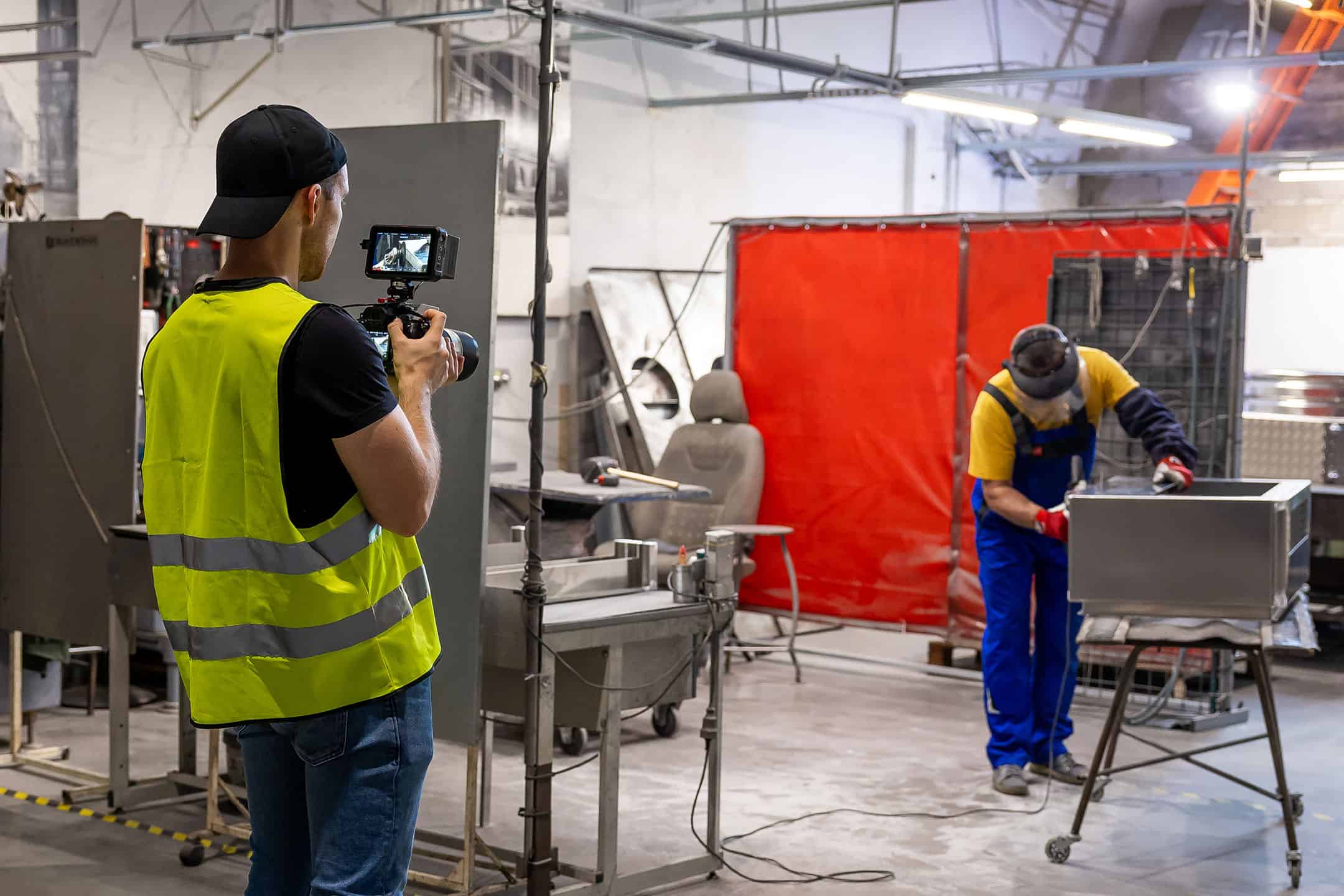
Filming a product in use gives buyers a clearer sense of how it performs within the conditions they recognise. Rather than asking them to interpret an isolated product shot, the footage shows how it fits into the day-to-day process around it.
For industrial products and specialist engineering components, this context shows buyers how the product fits within their own workflow.
Use animation for internal workings
Some product benefits sit out of sight, inside a sealed unit or behind a protective casing. If a buyer cannot see how that part of the product works, it becomes harder to explain why it matters.
Animation can reveal internal processes that live-action footage cannot show, helping viewers understand how hidden mechanisms support the product’s wider role. Where needed, animated video production makes complex workings easier to understand.
Include performance and stress tests where relevant
Performance footage is most useful when it places the product under the conditions it is expected to handle in service. A stress test video can show how it responds when pressure is applied, giving buyers a clearer view of performance than a written claim alone.
For the footage to support a decision, the test needs to be framed around the intended application. Viewers should understand what is being assessed, how the product responds and why that performance matters within their own operating environment.
Structure a product demo around the buyer decision
A product demonstration video should follow the questions buyers need answered as they assess the product. Instead of moving through a feature list, it should show why the product matters within their working environment and give them enough confidence to continue the conversation.
Start with the problem
Open with the situation that creates a need for the product. This might be a point in the production process where existing methods create friction, or a setting where a particular technical requirement needs to be met.
Starting here gives viewers a reason to care about the product and relate its details to the conditions within their own operation.
Introduce the product in context
Once the context is established, the product can be introduced as part of the process rather than as an isolated object. Showing where it sits and how it is used provides a clearer sense of purpose, while giving technical viewers the operational context they need.
This creates a more natural route into the product’s features, because each detail has a clear relationship to the task it is designed to support.
Demonstrate the proof
The central section should show the evidence that matters to the buyer. That could mean seeing the product in use, understanding an internal mechanism through animation or watching its performance under the conditions it was built to handle.
This part of the video should stay grounded in practical relevance, showing buyers not only what each feature does but how it influences the process they are responsible for and the decision they need to make next.
Provide the appropriate next step
The final message should reflect where the video is being used and what the viewer needs next. On a website, that may mean encouraging a closer look at the specification or opening a technical sales conversation. At an exhibition, it may simply support a more informed discussion at the stand.
Rather than attempting to answer every question, the video should give the buyer enough clarity to decide whether a more detailed technical or commercial discussion is worthwhile.
Product demo video or product video?
A product demonstration video is designed to help buyers assess how a product works in practice. It concentrates on the application and the evidence behind it, whereas a broader product video may introduce a range or support a launch without going into the same operational depth.
The right format depends on what the audience needs next. Where buyers need to understand the product’s operational role, a demonstration-led video is more useful than a high-level overview.
How long should a product demo video be and what does it cost?
The right length and level of investment depend on the role the video needs to play in the buying process. A short edit may be enough to introduce the product on a landing page or at an event, while a formal procurement submission or technical sales discussion may need a fuller demonstration that gives buyers more evidence to assess.
Start with the decision the video needs to support, rather than setting the duration or budget in isolation. This helps establish the right level of explanation and whether focused edits would better serve different audiences.
Make technical products easier to assess
A well-planned product demonstration video helps engineering and manufacturing buyers understand a product before they invest time in a detailed technical or commercial discussion.
For broader sector guidance, see Square Daisy’s manufacturing video production page. You can also explore manufacturing video types for other formats that support product communication, training and internal understanding.
If you need to explain a technical product for sales, tender or distributor activity, discuss the right product videography approach.