For many healthcare organisations, video is used to make important information feel clearer and more approachable. It can give people a better sense of what to expect, particularly when they are considering a service, preparing for an appointment or trying to understand an unfamiliar process.
The subject matter often carries more weight than it would in other sectors. People may be worried, short on time or unsure which information is relevant to them. The content therefore needs to be accurate and carefully judged, while still feeling straightforward and reassuring to watch.
This is where healthcare video production requires a more considered approach. Patient consent, clinical review, regulated claims and the practical realities of a healthcare setting can all shape the project. Understanding the audience from the outset helps ensure the final video has the right tone and supports a clear purpose within wider patient, staff or stakeholder communications.
Why sector expertise matters in healthcare video production
Healthcare video is often used when people need clear, careful information. It may help patients understand a procedure, give staff a consistent explanation of a process or make a complex product or service easier to assess.
In healthcare, small decisions around language, consent and clinical detail can have a significant effect on how a video is received and used. Healthcare expertise helps ensure those decisions are made with the right context from the outset. A medical video production company with healthcare experience can plan around clinical detail, consent, patient sensitivity and the needs of different audiences before filming begins.
This gives the brief a clearer direction. It helps the script, level of detail and production approach reflect both the organisation’s communication objective and the circumstances of the people watching.
Healthcare marketing claims and clinical review
Where a video supports marketing activity, claims need particular care. Healthcare communications can involve treatments, medicines, medical devices or health-related services, all of which may be subject to specific advertising and regulatory requirements.
Sector experience helps identify when a statement may require evidence, clinical approval or further qualification. Without that awareness, a video can unintentionally overstate outcomes, simplify a complex clinical point or create a claim that is difficult to support.
Where a video supports marketing activity, the wording needs to be considered just as carefully as the visuals. The ASA CAP Code sets requirements for healthcare marketing communications, including the need for objective claims to be supported by appropriate evidence and for medical claims not to mislead. MHRA guidance on advertising medicines is relevant where medicines are promoted, including restrictions on advertising prescription-only medicines to the public and the requirement for public advertising to reflect the medicine’s authorised use.
A clear approval process allows clinical, legal and regulatory teams to review the script, claims and final edit at the right stages. Building this into the project early helps avoid late changes and gives everyone greater confidence in the finished content.
Planning around patients, staff and clinical settings
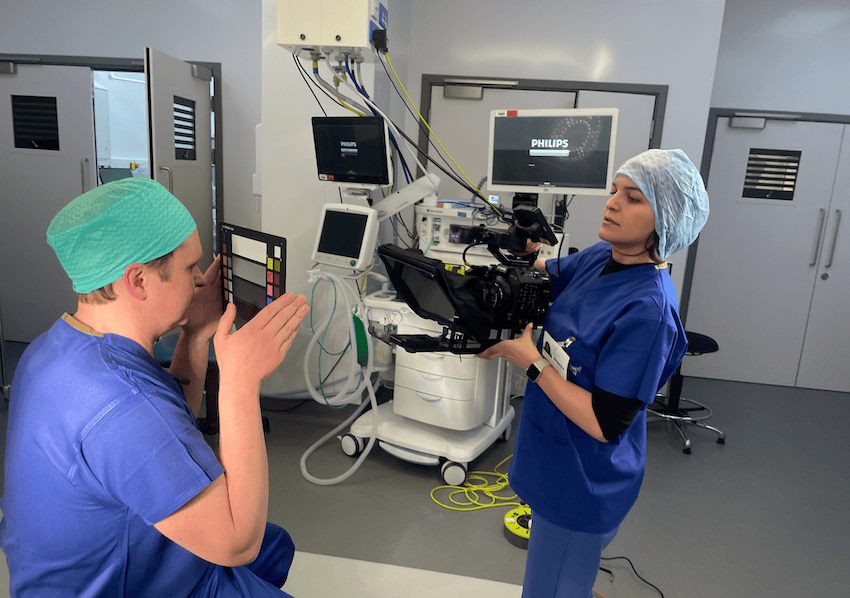
Filming in a healthcare setting requires careful planning because the organisation’s priority will always be delivering care. Patient privacy, clinical activity, staff availability and access to different areas can all affect what can be filmed and when.
Experience in these environments helps production teams work around the realities of a live clinical setting. Suitable filming areas can be identified in advance, schedules can account for staff responsibilities and the plan can adapt if patient care needs to take priority. A clinical video production company should be able to account for these practical considerations before filming begins, rather than treating them as issues to resolve on the day.
Consent also requires particular attention. Where identifiable patients appear, it needs to be voluntary, documented and specific about how the footage will be used. Internal teams may also need to consider safeguarding, confidentiality and data protection before filming takes place.
Patients are participants in the communication, not background detail. Their privacy, comfort and understanding of the project should shape the approach throughout.
A considered healthcare video brief should establish:
- Who the video is for and what it needs to help them understand
- Which facts, claims and terms need approval
- Whether patients, staff or other contributors will appear
- How consent will be recorded and managed
- What can and cannot be filmed in the setting
- Where the finished content will be used
Square Daisy has produced video for private clinics, NHS trusts, fertility specialists, ophthalmic surgeons and healthcare technology companies. This experience helps shape each project around the audience, clinical setting and communication objective.
What types of video do healthcare organisations commission?
The right format depends on the job the video needs to do. Patient education, recruitment, staff training and stakeholder communications all have different audiences and different measures of value.
Patient education and procedure explainers
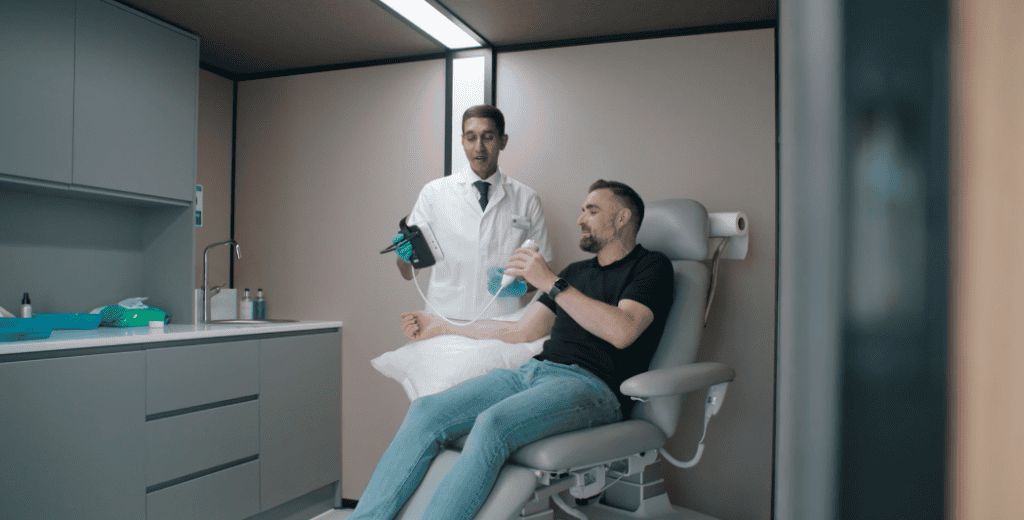
Patient education video production can help people understand what happens before, during or after an appointment, treatment or procedure. It gives patients space to take in information at their own pace and can support more informed conversations with clinical teams.
Patient-facing video must communicate with clarity, not jargon, and respect the emotional state of the viewer. Someone watching a procedure explainer may be anxious or unsure what to expect, so the tone, pace and visual choices need to make the information feel easier to follow.
For procedure-led content, our Berkshire Imaging procedure video case study shows how video can make information available beyond the appointment itself. Patients can take in the process beforehand, then revisit the explanation if they need further clarity.
Consultant and practitioner profile videos
For private healthcare organisations, people are often choosing both a service and the professional providing it. A consultant profile video can help prospective patients understand a clinician’s area of practice, approach and communication style before arranging an appointment.
This type of content can be especially useful where the decision feels personal or the service is highly specialised. Our Hugo Henderson consultant ophthalmic and oculoplastic surgeon project focuses on the role of the clinician within a private healthcare decision. It shows how video can give prospective patients a clearer sense of a consultant’s area of practice and approach before they decide to make contact.
Healthcare marketing, recruitment and training content
Healthcare marketing video can introduce a clinic or service, helping prospective patients understand what to expect before they make contact. The content should support consideration and enquiries without overstating likely outcomes.
Fertility communications can involve a particularly personal decision-making process. The IVF Matters video case study reflects the care needed when introducing information sensitively, without making assumptions about a prospective patient’s circumstances.
Recruitment video can help candidates form a more realistic view of a role, team and working environment. For internal audiences, training video can support onboarding, process explanation and repeatable learning for clinical and administrative staff.
For training-led content, video can give healthcare teams a consistent resource to return to when the same guidance needs to be understood across roles or locations.
For a specific area of maternity training, our NHS maternity LGBTQIA+ training video case study provides a useful reference. It shows how video can support staff learning where the subject calls for thoughtful, inclusive communication and a shared understanding across the team.
The injection techniques project relates more directly to practical instruction. It provides a useful reference for training content where a process needs to be shown clearly, allowing viewers to revisit the guidance when needed rather than relying solely on a one-off explanation.
Organisations planning similar learning content can also explore training video production, particularly where the same process, guidance or practical instruction needs to be communicated clearly and revisited over time.
Investor and stakeholder presentations
Private healthcare businesses and healthcare technology companies may need to explain a service, product or proposition to investors, partners and stakeholders.
The aim is usually to make the operational context and relevance of the proposition easier to understand. The content needs enough detail to support a decision without overwhelming viewers with information that does not affect it.
Building patient trust without overpromising
Trust is shaped by how a healthcare video makes people feel as well as what it tells them. Someone watching may be looking for reassurance before an appointment, trying to understand a role or deciding whether a service is right for them. The content should meet that need with clear, proportionate information rather than exaggerated claims or unnecessary drama.
For patients, this may mean explaining what will happen next, who they are likely to meet or where they can find further information. For candidates and staff, it may mean giving a fair view of a role, workplace or process, so they can make a more informed decision.
Clinical review helps protect that balance. It gives the organisation an opportunity to check that the language is accurate, the claims are appropriate and the finished video fits with the wider communication journey. The result is content that can support patient understanding, recruitment or staff learning without creating expectations that cannot be met.
When animation is more appropriate than live action
Animation is often the better choice when a healthcare subject cannot be shown clearly, safely or appropriately through live action. This may include internal anatomy, a sensitive procedure or a medical process that would be difficult to capture in a clinical setting.
It can give patients, staff or stakeholders a clearer view of how something works without involving real patients or relying on footage that may feel too invasive. This makes it particularly useful for patient education, product explanation and complex clinical concepts.
Animated video production should be considered when it gives the audience a more accessible and appropriate way to understand the subject. It can also give the organisation greater control over the level of detail shown, particularly when explaining a technical process to a non-specialist audience.
Different healthcare organisations have different video needs
Different healthcare organisations need different video approaches because their audiences, communication pressures and intended outcomes are not the same.
Private clinics may be focused on patient confidence, consultant introductions and service enquiries. NHS trusts and healthcare providers may need content for staff training, internal communications, service information or public education. Healthcare technology companies may need to explain a product to clinical, commercial and investment audiences, each with different priorities.
An NHS video production company should understand how content may need to support consistent staff understanding, accessible public information or communication across different services. The production approach should reflect those differences, with the audience, setting and decision the content is intended to support shaping the message, format and level of detail required.
Talk through your healthcare video requirements
If you are planning a healthcare video project and need to balance clear communication with clinical accuracy, Square Daisy’s sector experience can help shape the content around your audience, setting and communication objective. Contact the Square Daisy team to discuss your requirements.